


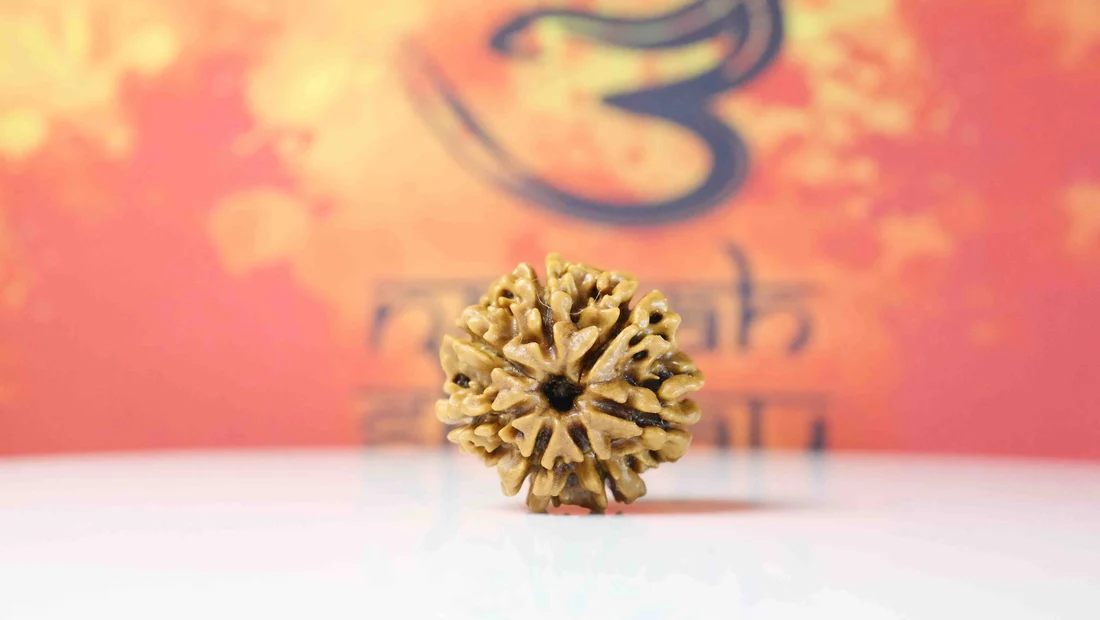
Buying a Rudraksha becomes confusing when the same bead appears under several descriptions, prices, and claims. One seller may focus on its spiritual significance, another on origin, while a third highlights certification or X-ray verification. For someone considering a 7 Mukhi Rudraksha for personal use, the real question is simpler: what should you check before choosing one, and how should you use it once you have it?
The seven-faced Rudraksha, commonly called Saat Mukhi Rudraksha, is traditionally recognized by seven natural divisions on its surface. It is associated in different traditions with themes such as stability, prosperity, discipline, and Saturn-related spiritual practices. These are traditional beliefs, not guaranteed financial or medical outcomes.
This guide takes a practical approach, helping a first-time buyer move from intention to selection without relying on exaggerated claims.
Start With Your Purpose, Not the Price
Before comparing products, identify why you are considering the bead.
Someone interested in meditation may want a simple, comfortable bead that can be incorporated into a daily practice. Another person may be interested in traditional astrology and specifically looking for a bead associated with Shani or Sade Sati. Someone else may simply want a meaningful spiritual object connected with financial discipline and responsible habits.
These different intentions do not necessarily require different physical beads. What changes is how the wearer understands and uses the Rudraksha.
For example, if your intention is to develop a more consistent morning prayer routine, the most important consideration may be whether you can comfortably wear or handle the bead every day. If authenticity is your primary concern, documentation and examination deserve greater attention.
Look at the Bead Before Looking at the Claims
A useful first inspection is surprisingly simple.
A 7 Mukhi Rudraksha should display seven naturally formed Mukhi divisions. The grooves should have an organic appearance and should extend naturally along the bead rather than looking freshly engraved. Natural Rudraksha can also show variation in texture and shape because it is a seed rather than a precision-manufactured object.
When examining photographs online, zoom in on the actual bead. Look at both ends, the groove walls, the surface texture, and the central opening. Do not rely only on a studio photograph that makes every bead look identical.
A particularly useful question is: Can I see enough of the actual bead to make a reasonable assessment?
If the answer is no, ask the seller for additional photographs before purchasing. Buyers interested in examining a specific product can also review a 7 Mukhi Rudraksha Buy Online listing and use the same inspection checklist before making a decision.
Nepal or Indonesia? Avoid the “One Must Be Better” Assumption
Buyers often become focused on origin. Nepal and Indonesia are both associated with Rudraksha production, and beads from these regions can differ in size, shape, texture, and appearance.
A Nepal-origin bead may appeal to someone looking for a larger, more pronounced bead, while a smaller Indonesian bead may be more convenient for a mala or everyday jewellery. Physical characteristics alone, however, should not be treated as conclusive proof of geographic origin.
The better question is not simply, “Is it from Nepal?”
Instead, ask:
- Is the stated origin documented?
- Is the bead naturally formed?
- Is the Mukhi count clear?
- Is the condition of the bead disclosed?
- Does the documentation correspond to the actual bead?
- Is the seller transparent about verification?
This approach prevents origin from becoming a shortcut for judging authenticity.
Understand What Certification Actually Adds
Certification can be useful because an online buyer cannot physically inspect the bead before ordering. A Lab Certified 7 Mukhi Rudraksha may come with documentation intended to support identification or testing.
However, buyers should read the certificate rather than treating the word “certified” as a magic label.
Check whether the report identifies the bead, states what was examined, and provides enough information to connect the document with the product being purchased. If X-ray verification is provided, understand that the purpose is to examine internal structure and compare it with the externally visible Mukhi formation.
For buyers who specifically want documented examination, a X-Ray Verified 7 Mukhi Rudraksha can be considered alongside the seller’s documentation and product photographs rather than judged from the certificate alone.
Why the Cheapest Option Can Be the Wrong Comparison
A large price difference does not automatically mean that one seller is honest and another is not. Rudraksha prices can vary because of origin, size, appearance, documentation, condition, mounting, and seller positioning.
Suppose one listing costs ₹500 and another costs ₹1,500. Instead of immediately choosing the cheaper option, compare what each listing actually provides.
Does one include individual photographs? Does one provide authentication documentation? Is the stated origin different? Are you comparing a loose bead with a mounted pendant? Are the beads actually similar in size and quality?
This gives you a much more meaningful way to understand 7 Mukhi Rudraksha Price than comparing two numbers displayed on different websites.
Build a Simple Daily Practice
Once you have selected a bead, the next challenge is consistency.
There is no need to turn wearing Rudraksha into an unnecessarily complicated routine. Different spiritual traditions prescribe different practices, so people should follow their family, guru, or devotional tradition where applicable.
For someone beginning independently, a simple routine might involve keeping the bead clean, wearing it respectfully, and spending a few quiet minutes each day in prayer or meditation.
Rudraksha malas have traditionally been used as prayer beads for mantra repetition, making the bead suitable for people who want to combine physical symbolism with a regular spiritual practice.
The commonly known Shiva mantra “Om Namah Shivaya” is widely used in Rudraksha-related devotional practice, although mantra selection can vary between traditions.
Be Careful With Financial and Astrological Expectations
Searches for 7 Mukhi For Financial steadiness, a 7 Mukhi Cash Box, and 7 Mukhi for Sade Sati reflect the different ways people interpret this bead.
Traditionally, the seven Mukhi is connected by some traditions with prosperity, stability, and Saturn-related practices. However, a Rudraksha should not be treated as a guaranteed method for increasing income, removing debt, changing investment outcomes, or solving financial difficulties.
A healthier approach is to use the bead as a reminder of the qualities you want to cultivate.
For example, someone worried about financial instability could use a spiritual routine as a reminder to review expenses every Sunday, maintain savings discipline, and avoid impulsive purchases. The Rudraksha becomes part of the person’s routine, while practical financial decisions remain based on evidence and professional advice where appropriate.
That distinction allows traditional spirituality and practical decision-making to exist together without making unrealistic promises.
Three Buying Mistakes Worth Avoiding
Buying only because the photograph looks impressive
Professional photography can make almost any natural object look exceptional. Examine structural details instead of relying on presentation.
Assuming one home test proves authenticity
Water, copper, and other traditional tests are frequently discussed online, but none should be treated as conclusive proof. Even a fake bead can sometimes behave similarly to a genuine one under a simple physical test.
Paying for a claim instead of evidence
Statements about extraordinary benefits should not replace basic product information. A transparent seller should be able to explain what the customer is actually receiving.
A Better Decision Checklist
Before placing an order, take two minutes and ask:
Physical: Can I clearly see seven natural Mukhi divisions?
Documentation: Is the testing or certification information understandable?
Product identity: Are the photographs of the actual bead or merely representative?
Origin: Is the claimed origin clearly stated?
Price: Am I comparing equivalent products?
Purpose: Do I understand why I want to wear or use this bead?
Expectations: Am I treating traditional benefits as beliefs rather than guarantees?
If the answers are satisfactory, the purchase decision becomes considerably less complicated.
Conclusion
The most sensible way to choose a 7 Mukhi Rudraksha is to separate tradition, authenticity, and expectations. Learn what the seven Mukhi structure looks like, examine the available documentation, compare equivalent products, and choose a seller that provides enough information for you to make an informed decision.
Most importantly, give the bead a realistic role in your life. It can be part of prayer, meditation, reflection, or a personal spiritual routine without being treated as a replacement for practical action. That balance makes the buying decision more thoughtful and the practice more meaningful.

